Digital

LinkedIn introduces Showcase Pages

LinkedIn wants to become more of a professional publishing platform. On Tuesday they followed through by introducing a new feature called Showcase Page allowing businesses on the professional networking site to target the fans of a specific product or brand. They are intended to work more or less like the already existing Company Pages with the difference being that they linkedin_showcase_pagesenable more niche marketing, targeting a specific audience rather than all of your followers.

As a company you can create up to 10 Showcase Pages for free (although LinkedIn has hinted that they will accomodate larger companies with more if needed). And of course you can support those pages with the usual follower ads and sponsored updates. LinkedIn -after all – needs to make some money.

And LinkedIn will offer a built-in analytics program so you can track the success of your pages. To round it off, the pages look great visually! Microsoft and Adobe have already started to use this new feature and the pages are being rolled out to all users over the next few days. I will definitely be trying it for some of my clients.


Living in a Digital Economy with Analog Boards

analogIt’s been a while since my last blog – summer is turning out to be busier than I thought! Russell Reynolds Associates 2012 Study of Digital Directors did catch my eye this month though.

In today’s world, the CEO should also be the chief digital visionary in order to be able to lead the company’s digital transformation. And if this is not yet the case, companies – large and small – definitely need to start building their digital capabilities in order to remain competitive in this ever increasing technological environment. It was not surprising to read that almost all of the “highly digital” boards were in the U.S, with only two in Europe and none in Asia.

Technology is creating new ecosystems and opportunities. And these opportunities also demand the need for thoughtful investments. So in order to fully take adavantage of what our new digital world has to offer, CEOs and management boards need to start to adapt.

It’s time for management to become digital visionaries!

Does one really need skills to be a social media manager?

apeWhile I have been working in marketing and communications for a very long time, social media was not always around. Everything I know relating to social media is something that I have taught myself and have learned by working with and for different clients. And it does not stop there. Technology, metrics, SEO, you name it are developing at incredible speeds meaning having to constantly stay on top of the latest developments. It certainly is not something anyone can teach you overnight (even if there are many companies out there, making a quick buck offering certified social media professional courses).

I notice many businesses underestimate what it means to deliver good social media. It takes time and expertise. It demands lots of different skills like networking, planning and strategy, understanding the customer and the business, writing skills, analytics, commitment and focus, just to name a few. And very important is also experience. I certainly would not trust a new college graduate or trainee to handle my business’ social media activities. You need a strong grounding in marketing communications. You need to understand the industry, its products and have customer facing skills to deal with what social media is all about: engagement. Engaging with community for a business needs to be be strategically driven. And this works best if you are a marketing strategist who can oversee the complete picture. If you believe social media success is about having tons of followers then you are walking down the wrong path.

But enough on this topic. Sailing season is starting and I am off to the boat in bella Italia! Ciao.

Twitter is the new newswire, the new trading floor

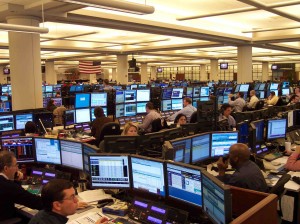
trading-floor-300x224The biggest news in the past weeks has been coming from social media. I read about the Boston Marathon bomb attack on Twitter. In near real time. With photos and videos. It was at least another 15 minutes until the major news outlets started reporting on TV and online. More and more, Twitter is giving us major news events before the rest. Yes, Twitter has become the new news wire.

And getting news from Twitter is also influencing our markets and the way we invest. Companies like StockTwits built an entire trader network based on twitter feeds. NYSE added social sentiment to its super feed market data service drawn from Twitter in February. Mid-April Bloomberg announced that they were adding Twitter posts about companies to their terminals. And I know of many small trading firms that give their traders their own Twitter screen next to all the others they need for their daily business.

Is there a pattern here? There sure is. Trading floors and their chatter have more or less vanished. Twitter is filling the void by letting like-minded people find each other on a digital level.
As blogger Barry Ritholtz put so well in an article in the Washington Post last week, “With Twitter, you can build your own virtual trading floor and research department”. While Twitter can offer a lot of misinformation, it also allows you to get different view points from sources you would not get in other news outlets. It lets you spot trends and ideas. It just is so much faster than any other traditional news media.

But as we saw last Tuesday, fast can also cause havoc. I was on the subway when I saw @AP report on Twitter that there had been explosions at the White House, Barack Obama was injured. While I did not really believe it (or hoping it was false), I was waiting, updating my screen seeing if other new outlets were about to report the same news. It turns out @AP had been hacked but in those minutes, this tweet alone caused a mini-crash on the Dow. The traditional chain of events “news comes out, markets react” had been subverted. So has the credibility of Twitter as a news source taken a hit since then? Sure. But nonetheless Twitter remains the new number one place for news.

B2B is P2P

lightThis week, I was wondering why marketers often make a distinction between B2C and B2B. Yes, there may be a difference in purchasing decisions. More logic, less emotion. But even if the name is “B2B” you are still selling to people, not businesses. And these people are also consumers who have daily interactions with the B2C greats like Apple or Amazon and therefore most likely have certain expectations about the sales and marketing process. Across the board they are looking to build relationships, gain insights and knowledge and develop loyalties. So when looking for best practices in B2B marketing, we should definitely take a look and see what we can learn from B2C companies.

Content definitely is a cornerstone for both marketing practices. For B2B it is about showing your expertise and core business values. Good (and plenty!) content can help you stand out among the large flow of information that is out there. So we need to create opportunistic content that revolves around news, visions and trends, finding the right distribution channels and tools. Content that stands out and is consistent over time will be a clear winner. Paired with B2C inspired social media  strategies we can create engagement with our audience. And engagement in turn creates communities.

Our audience should be more than just faceless readers of our content. B2C communities give their audience an opportunity to engage with the brand. In B2B our opportunity exists in creating a real network of customers, influencers and other interested parties where we can share information, developments and comments.I am convinced we can transform businesses and how we market them by taking a closer look at the B2C market and using the inspiration to create a competitive advantage.

Facebook’s bait and switch

Are you getting increasingly frustrated with Facebook? Because I sure am!FB

Already in 2012, Facebook made changes to their EdgeRank algorithm that dictates what brand content appears in follower feeds in a move to get people to pay for the promotion of their content. I remember the backlash at the time was huge. So I would have hoped that by now Facebook would have addressed the criticisms and gone back to let followers decide what they want to see and not make that decision for them. But apparently not. Nick Bilton from the New York Times blogged  on Sunday that he had started to see little interaction on his Facebook page despite having over 400,000 followers. All that changed when he paid $7 to promote his columns with his followers on Facebook. Believe it or not he saw a 1000% increase. EdgeRank also has another feature that  influences how often your follower sees a new post depending on how that follower has interacted with you recently, if he has found your posts interesting and how much he has engaged with you. I started to notice this worrying development in the past few weeks on the brand pages that I am managing for my customers. They also have noted a significant drop in interaction. And (even worse) so has my own timeline.

Should an algorithm really make a decision for you what posts you should see? Should a person not make that decision by blocking or unsubscribing? After all it is people who have made a decision to like or follow other people and things that are of interest to us whether we engage, like or just read. Facebook surely is overstepping a boundary here.

To me the true value of a Facebook Fanpage is that I can reach all my followers with every post. As a brand, I value the presence I have on social media channels as they also help me as a brand to engage with my community and get an understanding of my audience. But probably this is of little interest to Facebook (even if they do want the data that is created on a daily basis). What is the true value of a Facebook Fanpage if you do not get all the reach with your post or that you as a follower are not reached? Maybe as a consequence one has to really consider to build up brand audiences on other networks such as Twitter (where the timeline shows everything) or Tumblr.

Hopefully Facebook will remember their mission statement to “make the world more open”. And find  a balance between revenue and entertainment  in order not to become the old MySpace that in the end looked like a littered, paid content cemetery.

“Digital disruption” or a massive shift in the way companies do business

Everything is going digital, regardless what business you are in. This so-called “digital disruption” will mean a massive shift in the way companies do business. godzilla

According to James McQuivey’s interesting articledigital disruption is all customer driven. CMOs are the gateway to the customers, so they need to be the drivers of digital communications, tools and platforms. But as McQuivey correctly points out, this is not a task that can be completed on their own – it has to be a collaboration between you, the CTO, the CFO and COO. And this is where the article gets back to baseline of my previous post: be change agents, embrace new ways of doing business, acquire new skill sets and most importantly really understand what your customers want and how you can best meet their needs. So check out McQuivey’s tips on how to get your C-suite to huddle up and get those “customer-focused purposes digital is leading you to embrace”.