Strategy

B2B is P2P

lightThis week, I was wondering why marketers often make a distinction between B2C and B2B. Yes, there may be a difference in purchasing decisions. More logic, less emotion. But even if the name is “B2B” you are still selling to people, not businesses. And these people are also consumers who have daily interactions with the B2C greats like Apple or Amazon and therefore most likely have certain expectations about the sales and marketing process. Across the board they are looking to build relationships, gain insights and knowledge and develop loyalties. So when looking for best practices in B2B marketing, we should definitely take a look and see what we can learn from B2C companies.

Content definitely is a cornerstone for both marketing practices. For B2B it is about showing your expertise and core business values. Good (and plenty!) content can help you stand out among the large flow of information that is out there. So we need to create opportunistic content that revolves around news, visions and trends, finding the right distribution channels and tools. Content that stands out and is consistent over time will be a clear winner. Paired with B2C inspired social media  strategies we can create engagement with our audience. And engagement in turn creates communities.

Our audience should be more than just faceless readers of our content. B2C communities give their audience an opportunity to engage with the brand. In B2B our opportunity exists in creating a real network of customers, influencers and other interested parties where we can share information, developments and comments.I am convinced we can transform businesses and how we market them by taking a closer look at the B2C market and using the inspiration to create a competitive advantage.

Put an end to the old days of marketing!

westThis week I remembered the “good old days” of marketing where when asked to set up a marketing plan we would talk direct mailings (printed! sent via mail!), classic advertisements, printed newsletters or even “give a ways”.

This has all changed with the arrival of online marketing, social media and the ability to actually measure success. And with it, we have seen a shift in marketing focus. We can now truly connect with our customers, strengthen our relationships and improve customer service and products. We can be nimble and adapt quickly to changes in the market or when we see that our approach is not really reaching the customer in ways we want to. Great progress, right? But for some reason there are still many people in marketing out there who for some reason do not grasp the dynamics of social marketing. Maybe they prefer the good old days, with geeky ads in magazines we never were able to know the value of, maybe they are just scared.


In my opinion, us “old” marketers must really stop looking back at the old school of marketing techniques. Yes, there still are many tools out there from way back when that are still efficient. But the new marketing – which really is effective marketing – allows us to make connections that we were never able to build in the past. Having an online presence is just as important as having an offline one. Online gives us an opportunity to be transparent and to influence. It helps us in managing our competitive
advantage on a daily basis. We can measure market share, revenue growth and return on investments. It allows us to develop a strategy and to control execution. Yes, it may mean additional considerations, time spent and input. But with it we become greater influencers. And what is not to like about that?

It’s a bird, a plane…no it’s your marketing team!

Marketing can transform how a business leads. That should be somewhat of a mantra for us marketers. And not only for motivational purposes. ironman
Marketing is a key driver to growth, market share, brand awareness and revenue.Therefore, it is even more important to put together a top class team that understands the value and purpose of marketing as well as has an appreciation of it.  Because marketing is not a discipline “anyone” can do.

So does your marketing team understand your business? Do they have a vision of what they want to achieve? Do they know how to reach your customer and how best to communicate with them? Does your team have enough and varied experience to understand the different marketing channels? Are they adaptable, assertive and quick? Do they want to learn and grow? And finally, and most importantly, do they really understand the sales environment because marketing can only be truly successful if it works in unison with sales.

Your marketing team should be like Marvel Superheros – a group of talented, maybe sometimes flawed, persons coming together to “save the world”. For some super heroic inspiration you may want to read “Avengers Assemble: Putting Together a Superheroic Marketing Team”  – which superhero are you in your team?

It’s all about the brand

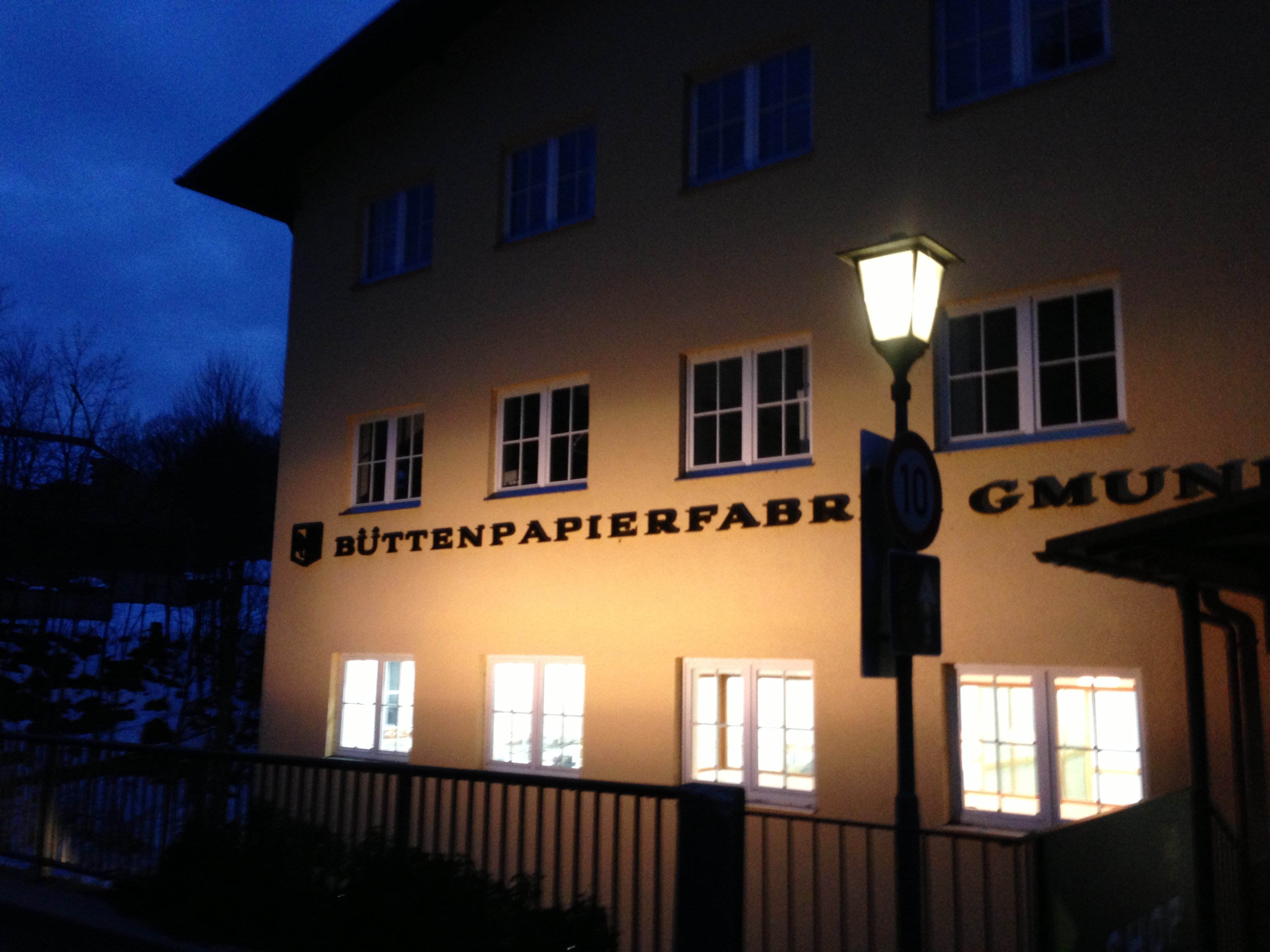
gmundLast week I attended a very interesting panel discussion about “Brands, Niche and Manufacturing”.

The discussion took place at the Buettenpapierfabrik Gmund near Tegernsee in Bavaria, a paper manufacturer of fine, hand made papers. Fun fact: they delivered the envelopes for this year’s Oscars!
Present on the panel were, among others, representatives from Gmund, liquor producer Underberg and fashion label Rena Lange. All these brands are in a niche, and they all have a very long entrepreneurial family history.

Some of these brands though only recently started to develop from family names into true brands. Many had grown up with the company and obviously the brand had become somewhat of a self-imposed responsibility. But all agreed that niche brands need to create passion, satisfaction and happiness. They have to stay true to their heritage and make their mark in the niche through quality, pricing and their uniqueness. And as history evolves so should the brand.

An important aspect was the important role customers play for niche brands. Everyone confirmed that the best strategy was to make the customer be the brand advocate. In order to do so, companies need to build up a close proximity to the customer, get to know them, their needs, their lifestyle and use it to incorporate it into the brand image. Excellent public relations was another vital point during the discussion. Good PR, as we all know, is worth more than any spending on advertising or media campaigns  The challenge of course is to keep a constant level of PR and through it  grow the value and trustworthiness of the company and its brand. But it was interesting to hear, that PR is only good when the entrepreneur, the brand owner, gets truly involved. All agreed that agencies (advertising or PR) were helpful but were never able to push the brand and live the brand as good as the company itself.

When asked about budget, and spending, the general opinion was that the most important investment  is into creating an image. Even if this is “only” less than 8% of the overall budget. The panel – much to my pleasure – siad that it was wrong to immediately expect an ROI and that one needed to be patient and consistent. Gmund’s MD Florian Kohler said that one should look at investing in brand image similarly to investing into new machinery. You know that you need it and you can write it off over the years – all the while you are actually creating an asset. And that is what building a brand is all about. It is creating an asset, if not the most important asset of your company. And if you get engaged in and with your own brand this is immediately reflected on the customer.

As a marketer a truly inspiring evening – thank you to Alphazirkel for the great organization!

Life in the B2B lane

b2bSales decisions in B2B marketing take much longer than in B2C. The customer wants to get to know you, to understand your business. And unlike in B2C, where a bad purchase decision is quickly forgotten, this can have a much more detrimental effect for B2B.

So it is important for marketers to reflect this in their social media and content marketing strategy. What customers want is information  Not only about this product or that service. They want to understand the business, the people behind it, their experience, know how and expertise and how it is relevant to them or even how it can help grow their own business. Or in other words, they want to build up a long term relationship. Something to keep in mind when deciding what to publish and where.

Facebook’s bait and switch

Are you getting increasingly frustrated with Facebook? Because I sure am!FB

Already in 2012, Facebook made changes to their EdgeRank algorithm that dictates what brand content appears in follower feeds in a move to get people to pay for the promotion of their content. I remember the backlash at the time was huge. So I would have hoped that by now Facebook would have addressed the criticisms and gone back to let followers decide what they want to see and not make that decision for them. But apparently not. Nick Bilton from the New York Times blogged  on Sunday that he had started to see little interaction on his Facebook page despite having over 400,000 followers. All that changed when he paid $7 to promote his columns with his followers on Facebook. Believe it or not he saw a 1000% increase. EdgeRank also has another feature that  influences how often your follower sees a new post depending on how that follower has interacted with you recently, if he has found your posts interesting and how much he has engaged with you. I started to notice this worrying development in the past few weeks on the brand pages that I am managing for my customers. They also have noted a significant drop in interaction. And (even worse) so has my own timeline.

Should an algorithm really make a decision for you what posts you should see? Should a person not make that decision by blocking or unsubscribing? After all it is people who have made a decision to like or follow other people and things that are of interest to us whether we engage, like or just read. Facebook surely is overstepping a boundary here.

To me the true value of a Facebook Fanpage is that I can reach all my followers with every post. As a brand, I value the presence I have on social media channels as they also help me as a brand to engage with my community and get an understanding of my audience. But probably this is of little interest to Facebook (even if they do want the data that is created on a daily basis). What is the true value of a Facebook Fanpage if you do not get all the reach with your post or that you as a follower are not reached? Maybe as a consequence one has to really consider to build up brand audiences on other networks such as Twitter (where the timeline shows everything) or Tumblr.

Hopefully Facebook will remember their mission statement to “make the world more open”. And find  a balance between revenue and entertainment  in order not to become the old MySpace that in the end looked like a littered, paid content cemetery.

“Digital disruption” or a massive shift in the way companies do business

Everything is going digital, regardless what business you are in. This so-called “digital disruption” will mean a massive shift in the way companies do business. godzilla

According to James McQuivey’s interesting articledigital disruption is all customer driven. CMOs are the gateway to the customers, so they need to be the drivers of digital communications, tools and platforms. But as McQuivey correctly points out, this is not a task that can be completed on their own – it has to be a collaboration between you, the CTO, the CFO and COO. And this is where the article gets back to baseline of my previous post: be change agents, embrace new ways of doing business, acquire new skill sets and most importantly really understand what your customers want and how you can best meet their needs. So check out McQuivey’s tips on how to get your C-suite to huddle up and get those “customer-focused purposes digital is leading you to embrace”.

“If you can’t convince the top, then you can’t be led”

gorillaPretty strong, but true words by Jeff Hayzlett, former CMO of Kodak, now turned marketing guru. He was referring to the fact CMOs need to be at the forefront of their business all the time. They need to be quick and agile, strong change agents within their organization.  In today’s fast-paced times, being satisfied with business as usual is not an option. An organization is only as strong its slowest common denominator and as Hayzlett says “… if the slowest is at the head of your organization, then you have lost before you began.”

There is an indisputable need for top management to embrace the power of digital. And it is the task of the CMO to understand digital as part of his or her marketing organization. Digital has changed marketing by offering us data that allows us to better understand what our customers are expecting, how they want to engage with us and what they definitely do not want to see. Therefore, CMOs must be change agents within their business, constantly making the case for change to the higher up organization whether this is regarding digital or new business opportunities.   Content, mobile and social media are fueling change in our industry. We are moving from a one sided conversation to engagement. All of this means embracing change and adapting to new environments.

And digital will be changing even more of our work environment. In a new report, Forrester analyst Anthony Mullen shows how new emerging technologies will make almost everything digital in the near future from wearables to smart objects. This will mean another shift not only in marketing practices but also marketing skills. It will mean spending more time on innovation such as gaming or interaction models. It will also mean formalizing “working relationships with adjacent practices such as customer experience, analytics, IT, and product design”.

Which brings us back to one of Hayzlett’s core messages “adapt, change or die”. As marketers and CMOs we must be willing to continuously adapt and change in order to meet the future, to spread the spirit of change to our executives and to ensure growth for our organization.

Hello….my personal brand is

hello

Wikipedia defines personal branding as a “process whereby people and their careers are marked as brands”. Personal branding has become more and more important as we manage ourselves as a commodity in what sometimes is a very competitive market place.
We all have relationships with brands, probably ever since we can remember and are constantly exposed to them in our daily life. And while the practice of self-branding may not be exactly like corporate branding it still is about packaging, designing and selling yourself – just like one would any product. Your personal brand is all about who you are, what you stand for and what you want to be known for.

So why should you care? Because in our digital world and the surge in social media more and more people are checking you out. Sometimes even before they have even met you – like your future employers, potential business partners….even those that may have a romantic interest in you.
And you should want to be in control of all those impressions. Packaging your self-brand is all about personal visibility. Technology and digital tools give us the opportunity to create a sell-able image of ourselves across multiple platforms. This may take some self-analyzing before you get started. Figure out who you are and how people perceive you. Think about your strengths, your expertise, your marketability and who you want your audience to be. Look at the channels that you want to set up, topics you want to talk about.

Being a personal brand is not necessarily about promoting your work or accomplishments, rather it is about promoting your presence in the market. Do not see it as a profit seeking practice. Use personal branding as a voyage of discovery. See it as an added personal value of how you think about yourself.

ISPO Munich 2013 – Inspiration thru Innovation

When I am not consulting, I also run another company that produces and sells a winter sport product called Zipflracer . So of course once a year I get to trek through the vast halls of ISPO MUNICH, the leading international sports business trade show.ispo

There are over 2,300 international exhibitors there presenting their selection of sporting goods ranging from outdoor, ski, action to performance sports. I guess I was one of the 80,000 visitors from one of the over 100 countries the trade show says attend every year. While we used to be exhibitors ourselves, the last few years we have used ISPO more to research trends and opportunities (and for lots of inspiration).

One of my first stops is always ISPO BRANDNEW, where young start up entrepreneurs present their innovations. A jury of experts selects from several hundred entries, only a few get to exhibit and even fewer get the sought after newcomer awards. For me, two companies stood out: Skora and Aetem – and none of them are winter sport products.

Skora produces running shoes and they not only stood out with their innovative design, but with their philopspohy and vision. Their running shoes are built to encourage biomechanically correct running performance i.e. running using whole foot and not only the heel, resulting in less impact and force shock. The shoes not only look cool, they are light and flexible  minimal cushioning but with enough support. They were still looking for a distributor in Germany, but I will definitely order some online from Portland, Oregon for now.

I am not a diver or a big snorkeler myself, but I do love sailing, swimming and spend a lot of free time on the water. The Munich-based company Aetem is a big fan of seatrekking, a combination of snorkeling diving during the day with nights spent on land. Their Premium Sea Pack is a waterproof backpack that can be used in and out of the water and functions as a bodyboard, backpack and even trolley when you hit that plane home. Really cool.

I wish I had more time at ISPO. There is always so much else to see and explore. People to talk to or just feel the vibes in the different halls ranging from the high fashion luxury feel in Hall B1 to the craziness of the A1 and A2 with all its boarders and hipsters. I did feel that this year there were less snowboard companies present than in previous years (are people going back to skiing?). Their space seemed to be taken up but a whole myriad of camera technology companies (and many of them pretty bad quality). I did like the “Soloshot” though which is basically a camera on a tripod that can follow a subject automatically and follows its move. How does it work? The camera has a  motor with a receiver, the athlete wears a transmitter. Now you can film yourself while surfing the big waves in Hawaii. And I was taken back to the 80’s when it was “cool” to ski in your tight blue jeans (but your Mom told you not to cause you would catch a cold) when stumbling upon Urbanus who have developed some pretty cool denim boardpants (I want!). And for all those that like to wear hoodies as much as I do in my free time AND love to listen to music, you need to check out Hoodiebuddie . They feature cool hoodies that contain a standard headphone jack in the front pocket which allow you to plug in any device of your choice. Once plugged in, the audio travels up embedded cables to your headphones that are built into the end of the drawstrings. How cool is that? The hoodie including the headphones is even machine washable. ispo1

So I have had lots of inspiration through innovation. Feels good. Looking forward to ISPO MUNICH 2014 already!